
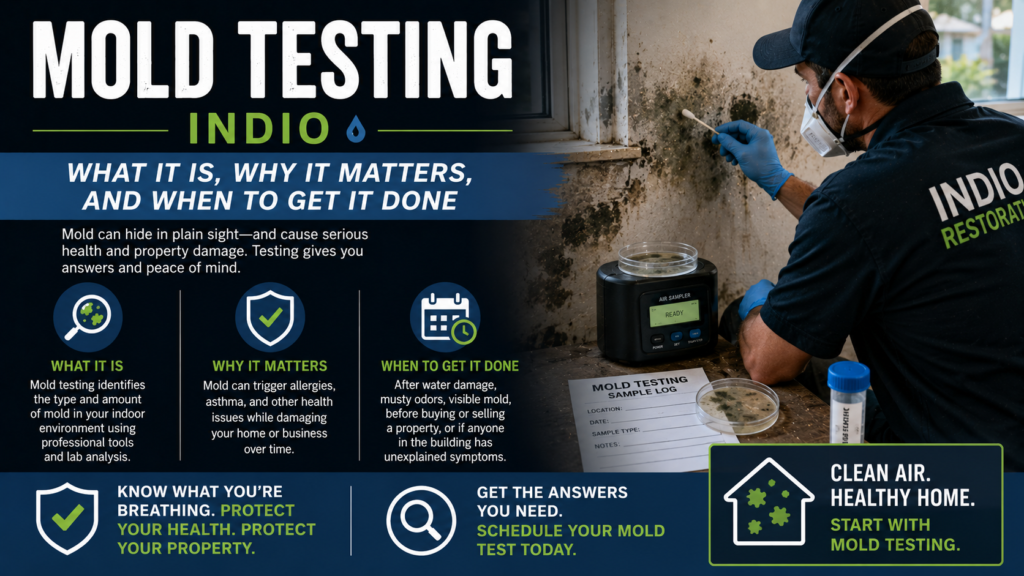
Mold is a biological reality in virtually every built environment. Invisible spores exist in the air both indoors and outdoors at all times, and under the right conditions primarily the presence of moisture and an organic material to colonize they can establish colonies that pose real risks to building materials and human health. In Indio, California, where the combination of desert heat, aging housing stock, and occasional significant moisture events creates specific conditions, Mold Testing Indio is a genuinely valuable tool for property owners.
What Mold Testing Actually Measures
Mold testing refers to the sampling and laboratory analysis of air or surface materials to detect the presence, type, and concentration of mold. There are two primary categories of mold testing.
Air sampling captures airborne mold spores by drawing a measured volume of air through a collection medium over a specified time period. The collected sample is then analyzed by an accredited laboratory to identify the genera and concentrations of spores present. Results are typically compared to an outdoor baseline sample because mold spores are naturally present outdoors, a properly conducted air test establishes whether indoor concentrations are elevated relative to the ambient outdoor environment, and whether the indoor profile suggests active mold growth.
Surface sampling involves collecting material directly from surfaces walls, ceilings, HVAC components, or other areas of concern using swabs, tape lifts, or bulk material collection. Surface samples identify what types of mold are present on specific materials and can confirm whether visible discoloration is actually mold or another substance.
Both types of testing are conducted by qualified inspectors and analyzed by certified laboratories. The results provide objective data rather than visual guesswork.
Why Indio’s Climate Creates Specific Mold Risks
Indio’s desert climate might seem inhospitable to mold and under purely outdoor conditions, it often is. However, interior environments are a different matter. Air conditioning is essential in Indio for most of the year, and HVAC systems create conditions that can promote mold growth if not properly maintained.
When air conditioning cools warm, humid air, condensation forms on cooling coils and within ductwork. If drainage is impeded or if insulation around ducts is compromised, this condensation creates persistent moisture in hidden locations exactly the condition mold requires. Additionally, HVAC systems circulate air throughout the entire structure, distributing any mold spores present in the system to every room.
Indio also experiences flash flooding events during monsoon season, and any water intrusion that is not completely and quickly addressed can initiate mold growth within 24 to 48 hours. In a home where walls are sealed and insulated, moisture trapped inside wall cavities creates ideal mold conditions while remaining completely invisible from the interior.
The real estate market in Indio includes a significant number of older homes, vacation properties, and seasonal residences that may sit unoccupied for extended periods. Vacant properties with minor leaks, plumbing issues, or condensation problems can develop substantial mold colonies before anyone notices.
When Mold Testing Is Appropriate
After any water damage event. Whether a pipe burst, an appliance leaked, or a monsoon storm brought water inside, mold testing within a few weeks of the event verifies that drying was complete and no mold growth initiated in the affected areas.
Before purchasing a property. Mold testing as part of a home inspection provides objective information about indoor air quality and the presence of any hidden mold issues. This is particularly valuable in Indio’s vacation home and investment property market, where properties may have sat unoccupied for extended periods.
When occupants experience unexplained symptoms. Headaches, respiratory irritation, persistent allergy-like symptoms, or unusual fatigue particularly when symptoms improve when the occupant is away from the property may indicate elevated mold concentrations. Testing provides objective data to either confirm or rule out mold as a contributing factor.
After visible mold removal. Following mold remediation, post-clearance testing verifies that the remediation was successful and that indoor mold levels have returned to acceptable ranges.
In HVAC-related concerns. Musty odors that seem to come from vents, visible growth near registers or on air handler components, or unusual dust accumulation may warrant testing of the HVAC system and associated areas.
What Mold Testing Cannot Do
Mold testing is a diagnostic tool, not a remediation solution. It identifies the presence, type, and concentration of mold it does not remove it. Additionally, a single point-in-time air sample represents conditions at the moment of sampling. Mold spore concentrations vary throughout the day based on temperature, humidity, air movement, and human activity in the space. Multiple samples taken under controlled, standardized conditions provide more reliable data than single samples taken without attention to these variables.
Mold testing also cannot identify the cause of a mold problem. If testing confirms elevated mold levels, a separate investigation is needed to find and address the moisture source that is supporting growth.
The Health Context for Mold in Indio
Research has established associations between exposure to mold and a range of health effects. Mold is a recognized allergen, and in sensitive individuals including those with existing respiratory conditions, immunocompromised individuals, and the elderly exposure can trigger or worsen symptoms. Some mold species produce mycotoxins that have more direct physiological effects, though the health significance of mycotoxin exposure in typical indoor environments is an area of ongoing research.
For Indio’s large population of older adults and seasonal residents, many of whom may have underlying health conditions that increase mold sensitivity, understanding the indoor air quality of a property is particularly relevant.
Understanding Your Mold Test Results
Laboratory reports from mold testing can be challenging to interpret without expertise. Results list mold genera identified, spore concentrations, and sometimes notes about the significance of specific species. A qualified inspector or industrial hygienist can translate these results into practical guidance whether the levels found represent a normal background condition, an elevated concern requiring investigation, or a confirmed problem requiring remediation.
Mold testing in Indio is not about finding a reason for alarm it is about having accurate information. For property owners, landlords, buyers, and businesses, that information supports better decisions about maintenance, remediation, and the health of the people who occupy the space.