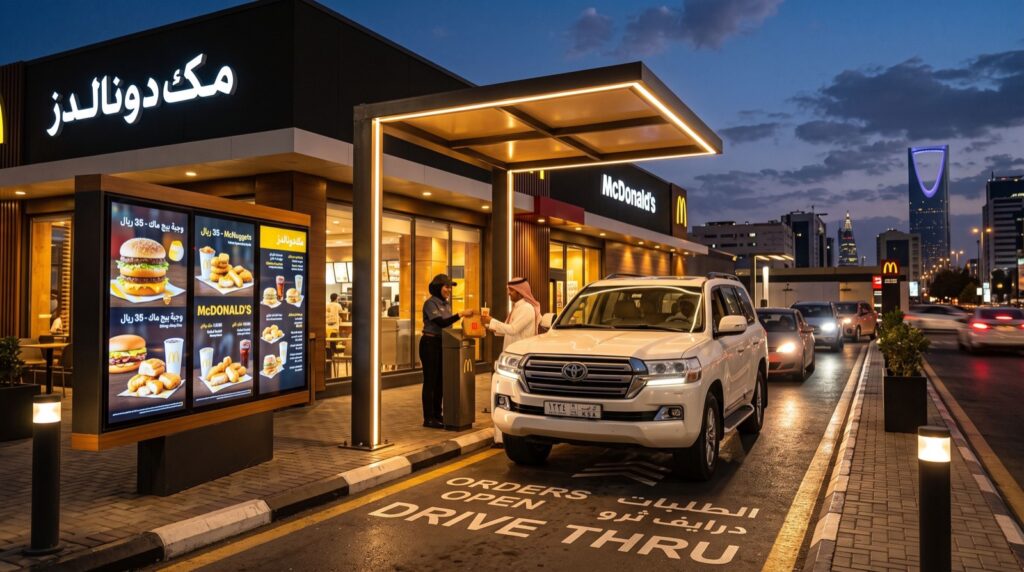
Anyone who has watched the lunch rush at a Hardee’s on Lahore’s MM Alam Road or a McDonald’s in Karachi’s Clifton knows the truth: the lane outside now earns more than the dining room inside. A properly engineered Drive Thru Solution in pakistan is no longer a luxury reserved for international franchises. In 2026, local burger chains, coffee brands, and even pharmacies are investing in headsets, timers, and outdoor menu boards because customers simply refuse to leave their cars.
The math is compelling. A well-run lane can serve a vehicle every 90 seconds, which means one window can outperform ten dine-in tables during peak hours. This guide walks you through the hardware, the workflow, and the seven practical decisions that separate a smooth lane from a honking traffic jam.
Why 2026 Is the Year of the Drive Thru in Pakistan
Fuel prices, urban congestion, and the post-pandemic habit of contactless pickup have permanently changed how Pakistanis buy fast food. Industry publications such as QSR Magazine have tracked this shift globally for years, and Pakistan is now following the same curve: quick-service brands report that off-premises orders account for well over half of urban revenue.
Franchise expansion tells the same story. New QSR outlets in DHA Lahore, Bahria Town Rawalpindi, and Gulshan-e-Iqbal Karachi are being designed lane-first, with the kitchen positioned around the pickup window rather than the counter. If your competitor serves a car in two minutes and you take six, the market decides quickly.
What Does a Complete Drive Thru Solution in Pakistan Actually Include?
Many owners assume a speaker post and a window are enough. They are not. A complete system is a chain of five links, and the weakest one sets your service speed.
- Wireless headsets so the order taker hears the customer clearly over generator noise and street traffic.
- An outdoor speaker and microphone post with noise cancellation tuned for Pakistani street conditions.
- A timer system that measures every car from greeting to departure and displays live targets to the crew.
- A digital or backlit menu board that survives 45-degree summers and monsoon humidity.
- Vehicle detection loops buried in the lane so the system knows the moment a car arrives.
The headset is the heart of the system
Crackling audio forces repeat questions, and every repeat adds fifteen to twenty seconds per car. Premium systems from brands like HME use dual noise-cancelling microphones, which matters enormously on a road where rickshaws and motorbikes provide a constant soundtrack.
Order Accuracy: Where the Kitchen Meets the Lane
Speed means nothing if the bag contains the wrong burger. Accurate fulfilment depends on tight integration between the order screen and the packing station. Many Pakistani operators now add barcode verification at the expo point: each packed item is scanned against the ticket before the bag is sealed.
For that job, a rugged handheld unit such as the Honeywell Voyager XP 1470g earns its keep. It reads damaged or poorly printed labels on the first pass, survives drops onto concrete kitchen floors, and keeps the packing line moving even when receipt printers are running low on ribbon. One missed scan caught at the window costs you a refund, an apology, and often a one-star review.
Single Lane, Dual Lane, or Mobile Pickup: Which Layout Fits Your Site?
Your plot size and traffic pattern should drive the layout decision. Here is how the three common configurations compare for a mid-size Pakistani QSR:
| Factor | Single Lane | Dual Lane (Y-merge) | Mobile Order Pickup |
|---|---|---|---|
| Cars served per hour | 40 to 60 | 70 to 100 | Varies with app adoption |
| Land required | Low | High | Minimal (2 to 3 bays) |
| Hardware cost | Moderate | Highest | Lowest |
| Staffing needed | 2 to 3 crew | 4 to 6 crew | 1 runner |
| Best for | Standalone outlets | High-volume highway sites | Dense urban plots |
Dual lanes look impressive, but they only pay off when you consistently stack more than eight cars at peak. Most first-time operators in Pakistan should perfect a single lane before expanding.
Seven Steps to Launch Your Lane Without Chaos
- Audit the site. Confirm you have at least 35 meters of stacking space so queued cars never spill onto the main road.
- Choose certified hardware. Insist on IP-rated outdoor equipment; imported gear that fails in Punjab heat is money burned.
- Plan the power. Every component must ride through load-shedding on UPS or generator changeover without rebooting.
- Install with professionals. Loop detectors, conduit runs, and audio calibration are not DIY jobs; hire dependable specialists who will also service the system after the warranty honeymoon ends.
- Set timer targets. Start at 240 seconds total experience time, then tighten by 15 seconds each month.
- Train scripts, not improvisation. A consistent greeting and upsell line keeps order time predictable.
- Review data weekly. Pull timer reports every Monday and coach the slowest daypart, not the whole team.
Frequently Asked Questions
How much does a drive thru system cost in Pakistan?
A single-lane setup with headsets, timer, speaker post, and installation typically lands between PKR 1.5 million and PKR 4 million in 2026, depending on brand and menu board choice. Financing through the equipment supplier is increasingly common.
Can a small local restaurant justify the investment?
Yes, if the location has road frontage and evening traffic. Operators usually recover the cost within 12 to 18 months because average ticket sizes at the window match dine-in while labour cost per order drops.
What maintenance does the equipment need?
Headset batteries need replacement every 12 to 18 months, speaker posts need seasonal cleaning after dust storms, and timer software needs occasional updates. A service contract with a local integrator keeps downtime near zero.
Does load-shedding damage drive thru electronics?
Sudden power cuts can corrupt timer data and stress base stations. A dedicated UPS on the communication rack solves the problem for a modest one-time cost.
Final Word: Build the Lane Before the Rush Arrives
The brands winning Pakistan’s QSR race in 2026 treat the lane as their main dining room. Choosing the right Drive Thru Solution in Pakistan today means faster cars, bigger tickets, and a crew that works calmly instead of shouting over static. Talk to an experienced integrator this week, request a site survey, and get your first timer report before your competitor gets theirs.